Types of Silk: The Complete Guide to Silk Fabrics and Their Characteristics
Twill, satin, chiffon, habotai and more — a complete guide to the different types of silk fabric and their unique characteristics.
Silk Is Not One Fabric — It's a Family of Fabrics
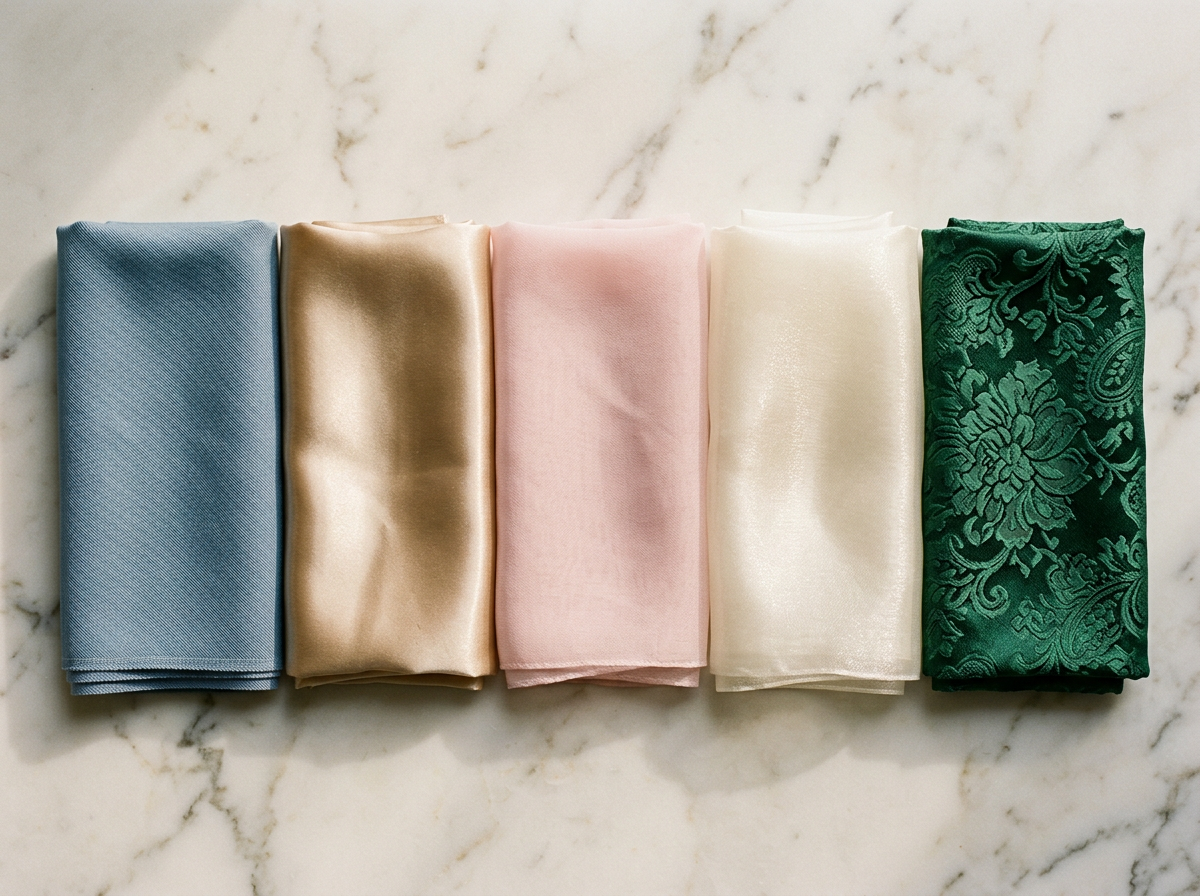
When people say "silk," they usually picture a single fabric: smooth, shiny, luxurious. In reality, silk is a raw fibre that can be woven or knitted into dozens of distinct fabric types, each with a different weight, texture, sheen and behaviour. Twill, satin, chiffon, habotai, crepe de chine, dupioni, organza and jacquard are all silk — but they look, feel and perform in completely different ways, and they are suited to completely different products.
Understanding these differences matters whether you are a designer specifying a fabric for a new collection, a procurement manager comparing supplier quotes, or simply a customer trying to understand what you are paying for. This guide breaks down the main silk fabric types, their characteristics, and where each one is typically used.
What Actually Makes Silk, Silk
All genuine silk begins as a protein fibre called fibroin, produced by the silkworm (most commonly the mulberry silkworm, Bombyx mori) when it spins its cocoon. This natural protein structure is what gives silk its signature properties: a subtle natural sheen caused by the fibre's triangular prism-like structure refracting light, a soft hand-feel, excellent breathability, and a strength-to-weight ratio that is remarkable for such a lightweight material.
Silk fabrics are typically measured in momme weight (abbreviated "mm"), a unit specific to silk that measures the weight of a fixed area of fabric. Lower momme weights (around 6–12mm) produce sheer, lightweight fabrics like chiffon and habotai; mid-range weights (12–19mm) produce the twills and satins used in most scarves and accessories; higher weights (19mm and above) produce substantial fabrics used for shawls, ties and structured garments.
Silk Twill
Twill is woven with a distinctive diagonal rib pattern, giving it a matte-to-semi-lustrous finish, excellent structure and a durable, slightly textured hand-feel. It holds a fold or a knot cleanly, resists creasing better than most other silk weaves, and provides an exceptionally sharp surface for printing fine pattern detail. This combination of durability, print performance and structure is why twill is the industry-standard fabric for printed scarves, foulards, twillies, bandanas and neckties. At Seraya Studios, twill in the 12–22mm range is our primary fabric across almost every product category.
Silk Satin (Charmeuse)
Satin — often called charmeuse in its silk form — is woven so that more of the lustrous fibre surface faces outward, producing a glossy, highly reflective finish and an exceptionally fluid, body-skimming drape. It is the fabric of choice whenever movement and shine matter more than structure: eveningwear, pareos, pillowcases and any accessory meant to catch and reflect light. Satin generally shows a Pantone-matched colour with slightly more depth and richness than twill, at the cost of holding a crisp fold less well.
Silk Habotai
Habotai is a lightweight, plain-weave silk with a soft, slightly crisp hand and a lower price point than twill or satin. It is commonly used for linings, lightweight scarves and entry-level printed accessories. It takes dye and print well but lacks the body and durability of twill, so it is generally reserved for products where cost efficiency matters more than longevity.
Silk Chiffon and Georgette
Chiffon is a sheer, lightweight, slightly rough-textured silk with an airy, almost weightless drape — the fabric behind the floating, ethereal look of many eveningwear stoles and bridal veils. Georgette is a close relative with a slightly heavier weight and more texture, offering a bit more opacity while retaining that same soft, flowing movement. Both are typically produced at low momme weights (6–10mm) and are the natural choice whenever a design calls for movement over structure.
Silk Crepe de Chine
Crepe de Chine has a fine, slightly crinkled surface texture and a matte finish that sits between the shine of satin and the flatness of habotai. It drapes beautifully without the high shine of satin, making it a popular choice for eveningwear and softly structured blouses, as well as for stoles that want fluidity without the sheerness of chiffon.
Silk Dupioni
Dupioni is woven from irregular, slightly rough yarn, producing a distinctive slubbed texture and a crisp, structured hand — closer to a light shantung than a traditional smooth silk. It holds shape well, which makes it popular for structured garments, bows and eveningwear, though its texture makes it less suited to fine, detailed printing.
Silk Organza
Organza is a sheer, crisp, plain-weave silk with a slight stiffness that holds structure and volume — think of the crisp bows on gift packaging or the structured layers of bridal gowns. It is rarely used for wearable scarves but is frequently chosen for packaging ribbons, bridal veils and decorative applications where body and transparency both matter.
Silk Jacquard
Jacquard fabrics are woven, not printed, with the pattern built directly into the fabric structure using a specialised loom. This produces subtle tone-on-tone patterns or textured motifs with genuine depth, most commonly seen in high-end neckties and structured garments. Jacquard production is more complex and costly than digital printing, but it delivers a level of tactile richness that printed fabric cannot replicate.
Which Silk Should You Choose?
For most custom accessory projects — scarves, foulards, twillies, pocket squares, bandanas and ties — silk twill is the strongest all-round choice: durable, structured, and ideal for sharp digital printing. For anything focused on drape, movement or eveningwear — pareos, stoles, shawls — silk satin or chiffon tend to perform better. If budget is the primary constraint, habotai offers a genuine silk product at a more accessible price point.
At Seraya Studios, we produce almost exclusively in 100% silk twill and silk satin, the two fabrics best suited to durable, digitally printed wholesale production. If you are unsure which is right for your project, we recommend requesting a fabric swatch of both before committing to a production run — feeling the difference in your hands is always more informative than a description.
Ready to Create Something Extraordinary?
Contact us for a free custom production quote. Made in Como, Italy.
Request a Quote