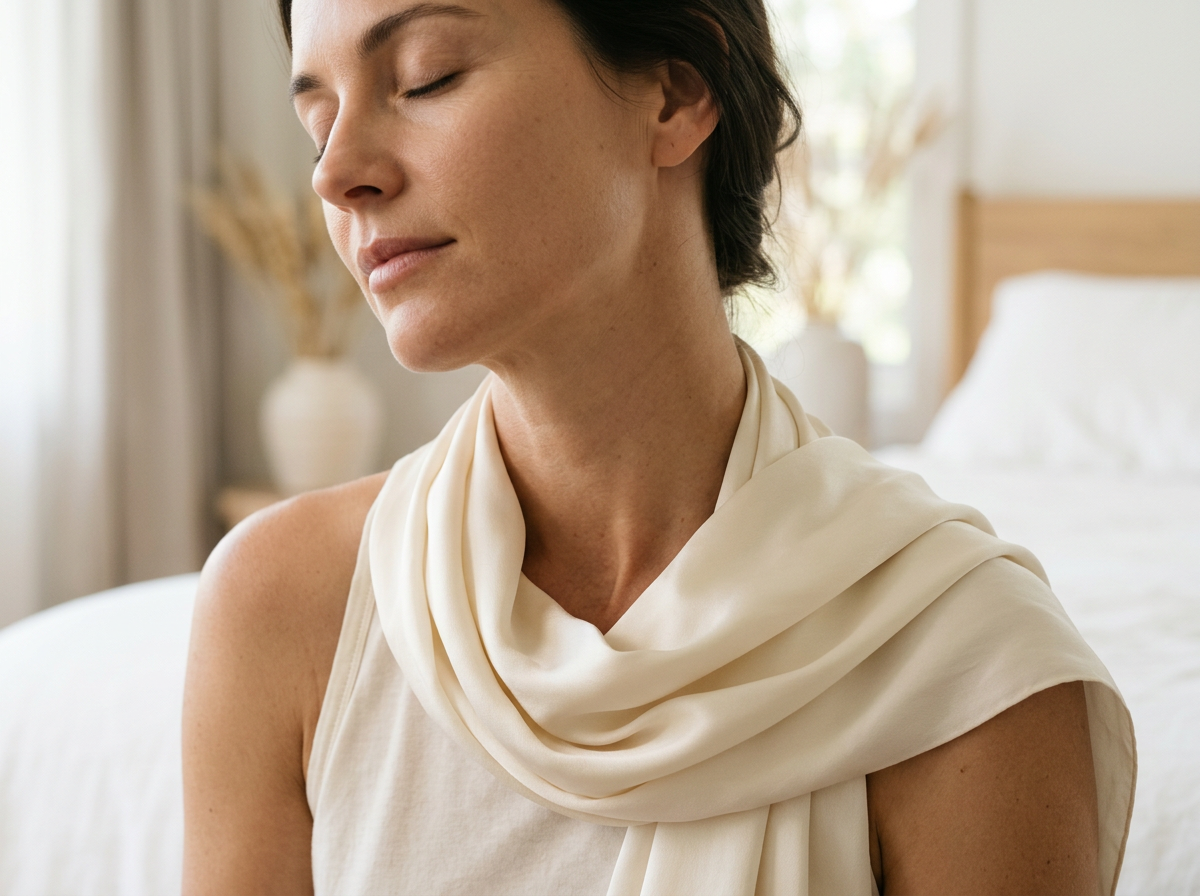
Silk Scarves as an Anti-Aging Accessory: Protection and Style
A factual look at how silk's smooth fibre structure and natural sun protection make it a gentler choice for skin-conscious styling.
Beyond Fashion: Why Skincare Circles Are Talking About Silk
For years, silk pillowcases have been a staple recommendation in skincare and haircare communities, praised for being gentler on skin and hair than cotton. That same conversation is increasingly extending to silk scarves, headscarves and neck wraps — accessories that sit directly against some of the most delicate and visible skin on the body: the neck, décolletage and hairline. This article looks at what is genuinely known about silk's relationship to skin comfort, and how to use silk accessories thoughtfully as part of a broader routine.
It's worth saying clearly upfront: a silk scarf is not a medical or dermatological treatment, and no accessory can reverse the effects of ageing. What silk can offer is a genuinely gentler daily experience for the skin it touches, and some practical protective benefits when worn thoughtfully — both of which are worth understanding.
Why Silk Feels Different Against the Skin
Silk fibres are smoother at a microscopic level than cotton, linen or most synthetic fabrics, which have a rougher, more irregular surface structure. This lower surface friction is the main reason silk is often recommended for sensitive or reactive skin: fabrics that catch, tug or rub against skin repeatedly over hours can contribute to irritation, especially in areas with thinner, more delicate skin such as the neck and chest. A silk scarf worn against the neck for a full day, or a silk wrap worn overnight, creates significantly less friction than the equivalent in a coarser fabric.
The "Sleep Crease" Conversation
Much of the popular interest in silk and skin comes from the idea of "sleep lines" — temporary creases that can form on skin pressed against a pillow or fabric overnight, which some dermatologists suggest may, with years of repetition, contribute to the formation of more permanent lines in certain individuals. The evidence here is more anecdotal than rigorously studied, but the underlying mechanical logic is sound: a smoother fabric surface creates less resistance against the skin during sleep, reducing the mechanical friction and pulling that a coarser fabric can cause. The same logic extends to silk scarves and wraps used to protect the hairline or neck area overnight.
Does Silk Actually Block UV Rays?
This is one of the most common questions we receive, and the honest answer is: partially, and it depends on the fabric. Silk does offer some natural ultraviolet protection — studies on fabric UPF (Ultraviolet Protection Factor) generally place plain silk somewhere in the UPF 10–30 range, meaning it blocks a meaningful portion of UV rays but considerably less than dedicated UPF-rated sun-protective fabrics. Denser weaves like twill, tighter weaves, and darker colours all increase the level of protection a silk scarf provides compared to a very sheer, light-coloured chiffon.
In practical terms, a silk scarf worn over the head, neck or shoulders during a day outdoors adds a genuine, if partial, layer of sun protection to areas that are frequently under-protected by sunscreen alone — the neck, décolletage and hairline are all common sites of visible sun damage over time. It should be treated as a helpful addition to sun protection, not a replacement for sunscreen or appropriate clothing coverage.
Breathability and Skin Comfort
Silk is a natural protein fibre that is highly breathable and has a degree of natural moisture-wicking capacity, absorbing and releasing moisture more readily than many synthetic fabrics. Worn against the skin for extended periods — around the neck, tied over the hair, or as a light layer over the shoulders — this breathability can reduce the trapped heat and moisture that sometimes contribute to irritation in sensitive individuals, particularly during warmer months.
Choosing the Right Silk for Skin-Conscious Styling
Not all silk feels the same against skin. Silk satin, with its smooth, glossy surface, generally offers the lowest-friction option and is often preferred for overnight wear or direct contact with sensitive skin. Silk twill, while slightly more textured, offers excellent durability and a matte finish that some people prefer for daytime wear, still with meaningfully less friction than cotton or synthetic alternatives. Weight also matters: a lighter momme weight drapes more gently against the skin, while a heavier weight offers more sun coverage when protection is the primary goal.
Building Silk Into a Skin-Conscious Routine
A silk foulard worn over the shoulders on a sunny day, a silk twilly used to gently tie back hair away from the face without pulling at the hairline, or a silk headscarf protecting the scalp and hairline during a beach day — these are simple, low-effort ways to incorporate the practical benefits of silk into an everyday routine, alongside sunscreen and a considered skincare regimen. The style benefit is immediate; the skin-comfort benefit builds quietly over years of gentler daily wear.
At Seraya Studios, we produce our foulards, twillies and stoles in both silk twill and silk satin, so brands developing skincare-adjacent or wellness-positioned accessory lines can choose the fabric hand-feel that best matches their audience.
Ready to Create Something Extraordinary?
Contact us for a free custom production quote. Made in Como, Italy.
Request a Quote