The Most Common Silk Scarf Sizes: A Guide to Choosing the Perfect Fit
From the compact 55×55cm square to the oversized 130cm wrap — a complete guide to choosing the right silk scarf size for your project.
Why Scarf Size Is the Decision Everyone Skips — and Shouldn't
When most people picture a silk scarf, they picture a shape rather than a size: the square, the long rectangle, the tiny strip tied around a wrist. But within each of those shapes sits a wide range of dimensions, and the exact size you choose changes almost everything about how the piece looks, feels and performs — how it drapes on the body, how much detail a printed pattern can carry, how it photographs, and how much it costs to produce.
At Seraya Studios, size is one of the first questions we ask every client, whether they are a fashion brand developing a seasonal collection, a hotel ordering welcome gifts, or a bride planning favours for two hundred guests. This guide walks through the most common silk scarf sizes, what each one is genuinely good for, and how to think about size when commissioning a custom production run.
The Silk Scarf Size Chart: From Twilly to Oversized Wrap
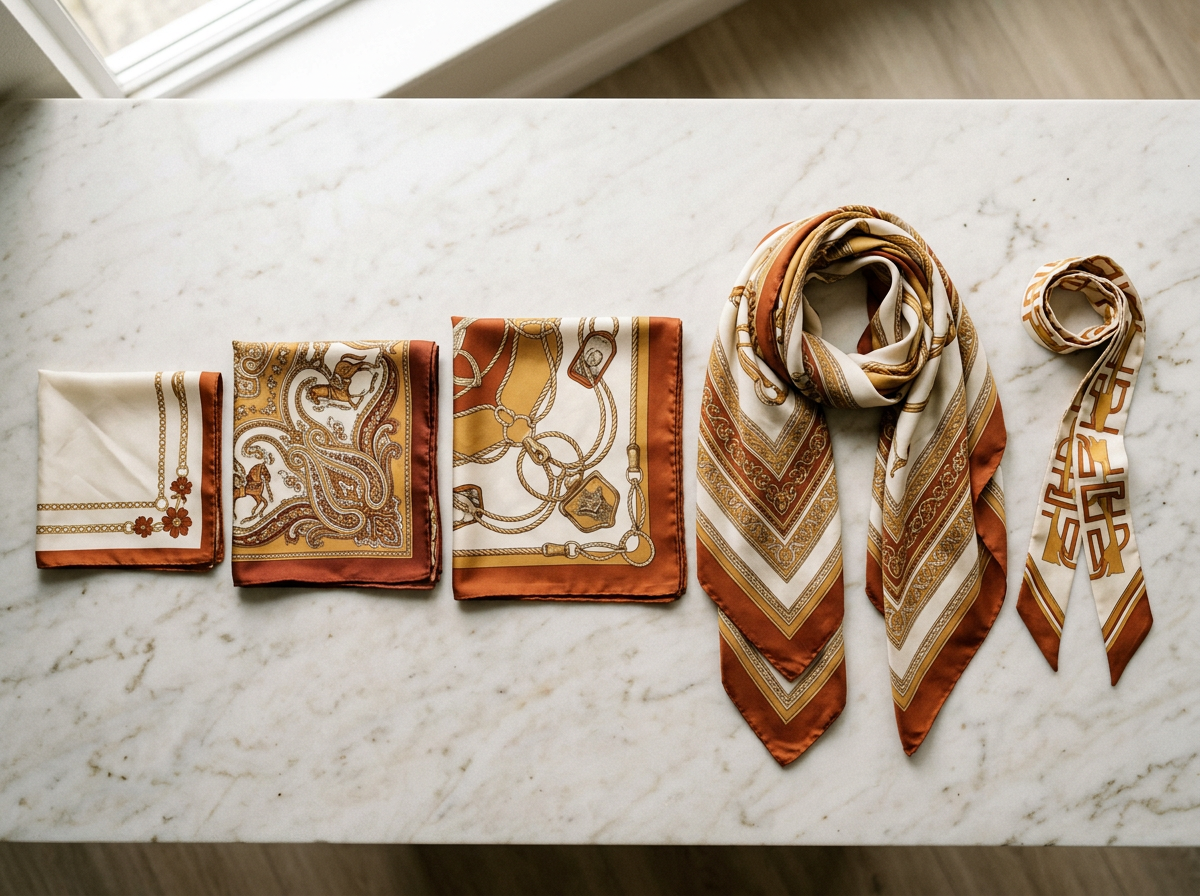
45×45 cm to 55×55 cm — the compact square. This is the smallest practical scarf format, often used for bandanas, hair accessories, bag charms or small novelty gifts. It uses the least fabric per unit, making it the most cost-efficient way to introduce a silk product into a catalogue, but the surface area limits how much pattern detail can be shown clearly.
65×65 cm to 70×70 cm — the everyday neck scarf. Large enough to knot comfortably around the neck or wear as a headscarf, small enough to stay light and easy to style. This is a popular middle-ground size for retail collections, corporate gifting programmes and hotel boutique lines where cost per unit still matters.
90×90 cm — the classic luxury foulard. This is the industry-standard "statement" size, the format most associated with heritage fashion houses. It is large enough to be worn multiple ways — around the neck, over the shoulders, tied to a bag, folded as a headscarf — and gives a printed pattern enough room to breathe. If you are producing a flagship product or a hero gift, this is almost always the size to choose.
110×110 cm and above — the oversized wrap. Less common, but increasingly requested for bridal styling, eveningwear and fashion editorial work, where the scarf functions more like a light shawl than a traditional accessory. At this size, fabric weight becomes especially important — a heavier silk can feel overwhelming, while a lightweight chiffon or fine twill keeps the drape elegant.
Oblong and rectangular formats. Not every scarf is square. Long rectangular formats — used for stoles (typically 45×180 cm to 90×200 cm) and twillies (6×90 cm to 10×130 cm) — serve completely different styling purposes: a stole is worn over the shoulders for coverage and elegance, while a twilly is tied around a bag handle, wrist or ponytail as a small decorative accent.
Matching Size to Use Case
Fashion retail and capsule collections. 70×70 cm and 90×90 cm remain the two best-selling sizes across our fashion brand clients, because they balance cost, versatility and shelf presence.
Corporate gifting and promotional programmes. 55×55 cm and 65×65 cm are frequently chosen when budgets need to stretch across a large number of recipients, while still delivering a genuinely premium silk feel.
Wedding favours. Couples planning favours for large guest lists often choose a 55×55 cm or 65×65 cm scarf, or move to the even more compact and affordable twilly format, so that quality per piece stays high even at volume.
Flagship gifts and VIP programmes. The 90×90 cm foulard, or a silk-blend shawl at 90×200 cm, is the size of choice when the gift needs to feel like a genuine luxury object rather than a promotional add-on.
How Size Affects Fabric Weight and Cost
Size and weight are closely linked decisions. A large-format scarf in a heavy silk twill can feel stiff and lose its natural fluidity, while a small format in a very lightweight chiffon can feel insubstantial. As a general rule, we recommend a lighter momme weight (12–16mm) for larger formats where drape matters most, and a slightly heavier weight (16–22mm) for smaller formats where structure and print sharpness are the priority. Cost scales primarily with fabric surface area, so moving from a 90×90 cm to a 65×65 cm format can meaningfully reduce the per-unit cost of a large production run without sacrificing the silk hand-feel.
Sizing for Wholesale and Private Label Production
If you are developing a private label range or a wholesale catalogue, we generally recommend anchoring your collection around two or three sizes rather than offering every possible dimension. A typical structure might combine one hero size (90×90 cm) with one accessible size (65×65 cm or 55×55 cm) and one small-format accessory (a twilly), giving customers a genuine range of price points from a single pattern investment — one design, three products, three margins.
Every size at Seraya Studios is fully customizable: there is no fixed catalogue you must choose from. We produce to your exact dimension, whether that matches an industry standard or not, in both silk twill and silk satin.
Choosing the Right Size for Your Project
There is no universally "correct" scarf size — only the right size for your fabric, your budget, your audience and how the piece will be worn or gifted. If you are unsure where to start, send us your use case, your target price point and your production volume, and we will recommend the size, fabric weight and finishing that gives you the best result.
Ready to Create Something Extraordinary?
Contact us for a free custom production quote. Made in Como, Italy.
Request a Quote