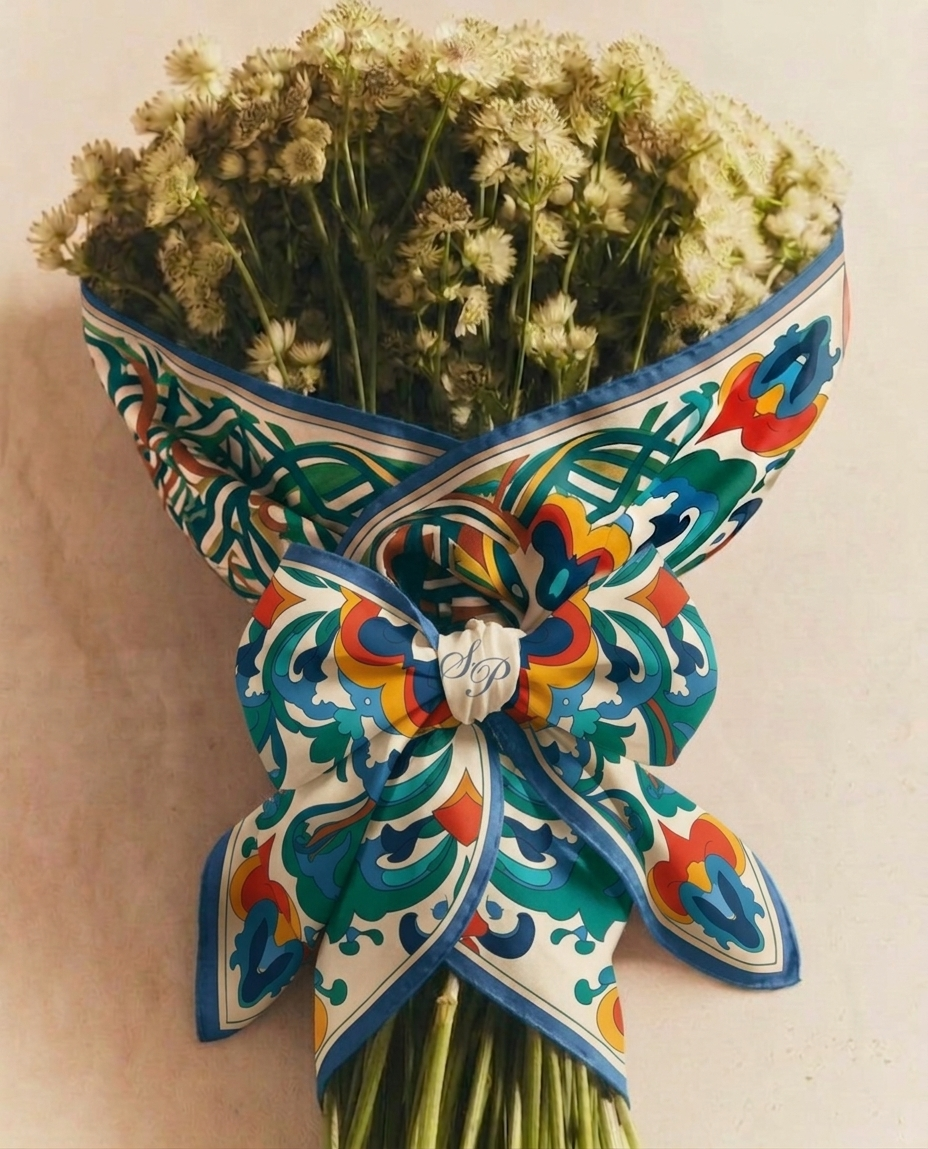
The Best Custom Silk Scarves Manufacturer: A Buyer's Guide to Choosing the Right Partner
"Best" manufacturer means something different for every buyer. This guide breaks down the 8 criteria that actually separate an exceptional custom silk scarf producer from an average one — so you can evaluate any supplier with confidence, including us.
Type "best custom silk scarves manufacturer" into Google and you will find dozens of companies claiming the title. Every one of them says the same things: premium quality, fast turnaround, competitive prices. None of that helps you actually choose.
The truth is that "best" is not a fixed ranking — it depends on what you are producing, at what volume, for what budget and for what purpose. What this guide offers instead is something more useful: the exact criteria professional buyers use to separate an exceptional custom silk scarf manufacturer from an average one, so you can evaluate any supplier — including us — with real confidence.
Why "Best" Depends on Your Project
A fashion label launching a 90 cm signature carré has different priorities than a corporate marketing team ordering 500 twillys for a conference. A hotel building a boutique retail line needs something different from a wedding couple ordering 100 favors. The "best" manufacturer for each of these buyers is not necessarily the same company — but the criteria used to evaluate them are identical. Master those criteria, and you can confidently assess any manufacturer in the world, in about fifteen minutes.
The 8 Criteria That Actually Separate Manufacturers
1. Production Origin and Supply Chain Transparency
Where a scarf is actually made — not where the company is headquartered, not where the sales office sits — is the single biggest predictor of quality. A manufacturer confident in its production will tell you exactly which district, which mills, which printers are involved, and will usually welcome questions about the supply chain. Vague answers about "our factories" without a specific location are a signal worth noticing.
2. Fabric Quality and Sourcing
Ask what silk types are available (twill, satin, crepe de chine, chiffon, georgette) and what weights (measured in momme or grams per square meter). A manufacturer that can discuss fabric specifications fluently, and that offers a genuine range rather than a single generic "silk," is working at a professional level. Request a raw fabric swatch before any printing — the hand of the material tells you more than any spec sheet.
3. Printing Technology and Color Accuracy
Digital inkjet printing is the modern standard for custom silk — it allows unlimited colors, fine detail and accurate reproduction of complex artwork, at far lower minimums than traditional screen printing. Ask specifically about Pantone or color-matching capability, and request a printed swatch of your actual design before committing to bulk production. Photographs of past work are not proof; a sample on your own artwork is.
4. Finishing Craftsmanship
The hem is where quality becomes visible to the eye and to the touch. A hand-rolled hem — rounded, plump, stitched individually by hand — is the universal marker of a luxury silk scarf. A flat, machine-pressed edge signals a lower production tier. Ask which hem finishes are available and look closely at a physical sample; this single detail tells you more about a manufacturer's standards than almost anything else.
5. Sampling and Proofing Process
Any manufacturer serious about quality will insist on two approval gates before bulk production: a digital e-proof (showing exact placement, dimensions and hem margins) and a physical printed sample. If a supplier is willing to skip straight to bulk production without a sample, that is not efficiency — it is risk being transferred to you.
6. Minimum Order Quantities and Flexibility
MOQ requirements vary enormously between manufacturers and directly affect who they can serve. Extremely high minimums exclude smaller brands, weddings and targeted corporate programs; extremely low minimums sometimes signal thin margins on quality. Ask for the MOQ by product and fabric type — a manufacturer with flexible, product-specific minimums is usually built to serve a wider range of serious projects.
7. Design Support and Communication
Not every buyer arrives with finished artwork. The best manufacturers offer real design consultation — helping translate a logo, a mood board or a rough concept into production-ready artwork — rather than simply printing whatever file you send. Communication speed and clarity during this phase is often the clearest early signal of how the rest of the relationship will go.
8. Compliance and Certifications
For companies selling or gifting in Europe, REACH compliance on dyes and chemicals is not optional — it is a documented requirement. Ask directly whether the manufacturer's materials are REACH certified and whether documentation is available. A manufacturer that answers this question immediately and specifically, rather than with a general reassurance, is operating at the compliance level serious buyers require.
Red Flags Worth Taking Seriously
A few patterns consistently predict a disappointing outcome: reluctance to disclose the actual production location; no willingness to provide a physical sample before bulk production; pricing dramatically below the category average with no clear explanation; stock photography instead of real production images; and pressure to commit before you have seen a sample of your own design on the actual fabric.
Questions to Ask Before You Commit
A short, direct list to send any manufacturer you are evaluating: Where exactly is production located? What silk fabrics and weights are available? What hem finishes do you offer, and can I see samples of each? What is your standard process — e-proof, physical sample, then bulk? What is the MOQ for the product and fabric I need? Are your materials REACH certified? What is the typical lead time from sample approval to delivery? The quality, speed and specificity of the answers tell you almost everything you need to know.
Why Como, Italy Sets the Reference Standard
Apply these eight criteria anywhere in the world, and one region consistently outperforms on nearly all of them: the Como silk district in northern Italy. Five centuries of concentrated expertise in weaving, dyeing, printing and finishing mean that fabric quality, color accuracy and hand-finishing craft are not marketing claims — they are the accumulated result of a supply chain built for exactly this purpose. This is not sentimentality about heritage; it is why the world's most demanding fashion houses have sourced silk from Como for generations.
How Seraya Studios Meets This Standard
At Seraya Studios, every one of these eight criteria is answered specifically, not generically. Production takes place entirely within the Como district — nothing is outsourced or relabeled. We work across silk twill, satin, crepe de chine, chiffon and georgette, alongside cotton, modal and cashmere blends, all REACH certified. Every project moves through a digital e-proof and a physical printed sample before bulk production begins, with hand-rolled and machine-rolled hem options available depending on the piece. Minimum quantities are set per product and fabric, making custom silk accessible for weddings, targeted corporate programs and full-scale brand launches alike. And our design team works directly with clients who arrive with a finished logo, a rough idea, or nothing more than an occasion to celebrate.
We do not ask you to take our word for any of this. Request a fabric swatch, ask for the specifics on any of the eight criteria above, and evaluate us exactly the way this guide recommends evaluating anyone.
Seraya Studios produces custom silk scarves and accessories entirely in Como, Italy. Request a fabric swatch or start your evaluation at info@serayastudios.com
Ready to Create Something Extraordinary?
Contact us for a free custom production quote. Made in Como, Italy.
Request a Quote