How to Care for a Silk Scarf: The Complete Guide
- serayastudios
- 4 days ago
- 7 min read

A silk scarf is an investment. Whether it is a custom piece commissioned for your brand, a gift from someone who knows your taste, or a treasure found at a vintage market, a well-made silk scarf can last decades — if you know how to look after it.
The good news is that silk, despite its reputation for delicacy, is a remarkably resilient fiber. The bad news is that the most common mistakes people make — machine washing, wringing, ironing at the wrong temperature — can cause irreversible damage in seconds.
This guide covers everything you need to know to keep your silk scarf looking as beautiful as the day it was made.

Understanding Silk First
Before we talk about care, it helps to understand what silk actually is.
Silk is a natural protein fiber produced by silkworm cocoons. Unlike synthetic fibers, it is not made of plastic — it is made of the same building blocks as human hair and skin. This is why silk feels so comfortable against the body, regulates temperature naturally and is naturally hypoallergenic.
It is also why it requires a different kind of care than cotton or synthetic fabrics. Silk fibers are strong when dry but significantly weaker when wet. Heat, harsh chemicals and mechanical agitation — the three things a washing machine does simultaneously — are its primary enemies.
Washing Your Silk Scarf
Hand Washing — The Recommended Method
Hand washing is always the safest option for silk scarves, regardless of what the care label says.
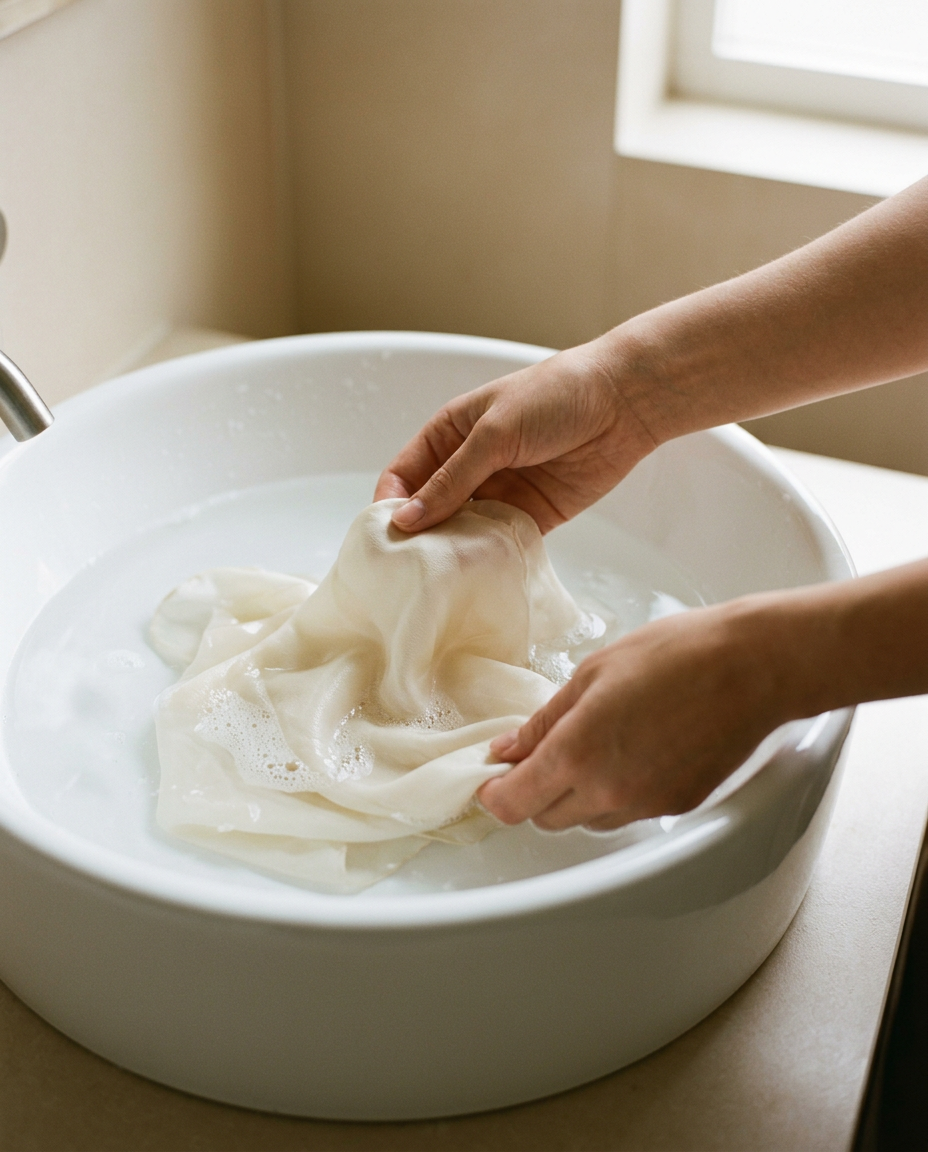
What you need:
A clean basin or sink
Cold or lukewarm water — never hot
A gentle detergent specifically formulated for silk or delicate fabrics. If you do not have one, a small amount of baby shampoo works well. Never use regular laundry detergent, fabric softener or bleach.
Step by step:
Fill the basin with cold or lukewarm water — never above 30°C. Hot water causes silk to shrink and lose its sheen permanently.
Add a small amount of silk detergent — about half a teaspoon. Less is more. Too much soap is harder to rinse out and can leave a residue that dulls the fabric.
Submerge the scarf gently and move it slowly through the water with your hands. Do not scrub, wring or twist. Think of it less like washing and more like rinsing — you are loosening dirt, not removing it by force.
Let it soak for no more than 3 to 5 minutes. Prolonged soaking weakens silk fibers.
Rinse thoroughly with cold water until all soap is removed. Incomplete rinsing leaves residue that attracts dirt and can cause the fabric to feel stiff.
Never wring. To remove excess water, lay the scarf flat on a clean dry towel, roll the towel up gently with the scarf inside and press lightly. The towel absorbs the water without stressing the fibers.
Machine Washing — Only If Necessary
Some silk scarves are labeled as machine washable. If yours is, follow these guidelines strictly:
Use the delicate or hand wash cycle only
Water temperature: cold (maximum 30°C)
Use a mesh laundry bag to protect the scarf from friction
Use a silk-specific detergent
Never spin at high speed — use the lowest spin setting or no spin at all
Even with these precautions, machine washing carries risk. Hand washing is always preferable.
Dry Cleaning
Dry cleaning is a safe option for silk, particularly for heavily printed scarves where color bleeding is a concern, or for vintage pieces where you are unsure of the fabric's condition. If your scarf has significant embellishment, embroidery or a delicate hand-rolled hem, dry cleaning is the recommended choice.
Always tell your dry cleaner that the piece is silk — not all solvents used in dry cleaning are suitable for silk fibers.
Drying Your Silk Scarf
How you dry a silk scarf is as important as how you wash it.
Never:
Put silk in a tumble dryer. The heat and mechanical action will damage the fibers and cause irreversible shrinkage.
Hang a wet silk scarf in direct sunlight. UV light fades silk colors rapidly and weakens the fibers over time.
Hang a wet silk scarf at all, if you can avoid it. The weight of the water stretches the fabric unevenly as it dries.
The correct method:
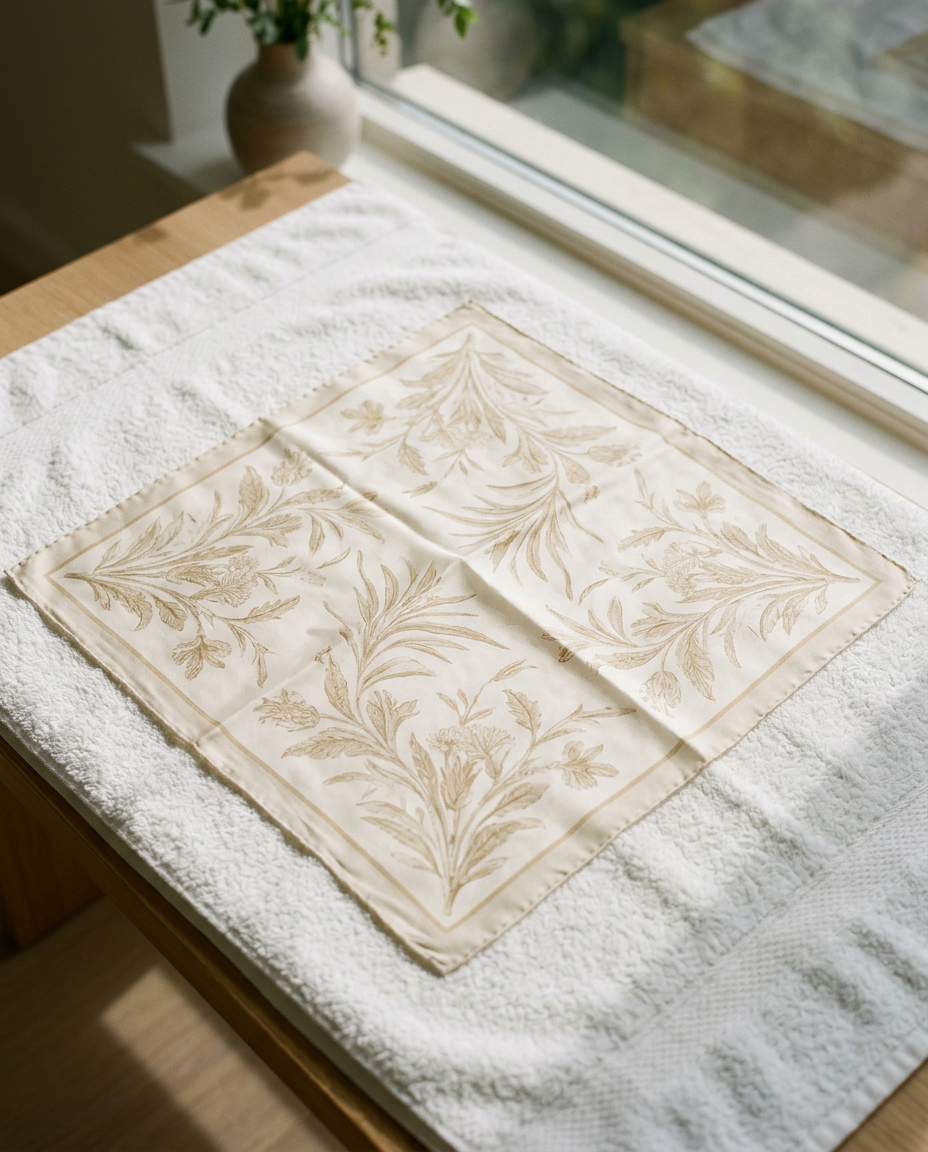
After removing excess water with the towel roll method described above, lay the scarf flat on a clean dry surface — a clean towel or a drying rack covered with a cloth — and reshape it gently by hand to its original dimensions.
Allow it to dry at room temperature, away from direct sunlight and heat sources. Depending on the weight of the fabric, this typically takes a few hours.
Ironing Your Silk Scarf
Silk can be ironed, but it requires care.
Temperature: Always use the lowest heat setting on your iron — the silk or delicate setting, usually marked with one dot. High heat causes silk to scorch, lose its sheen and in some cases melt the surface fibers permanently.

Steam: Use steam sparingly or not at all. While steam can help remove stubborn creases, too much moisture applied directly to silk can cause water marks — particularly on printed or dyed fabrics.
The iron method:
Iron the scarf while it is still slightly damp, or mist it lightly with cold water before ironing.
Always iron on the reverse side — never directly on the printed or finished surface.
Place a thin cotton cloth between the iron and the scarf for additional protection.
Move the iron continuously — never leave it stationary on the fabric.
Alternative — the hanging method:
If you want to avoid ironing altogether, hang the scarf in a steamy bathroom after a shower. The ambient steam relaxes the fibers and removes light creases without any direct contact. This works particularly well for lighter silk fabrics.
Storing Your Silk Scarf
Proper storage is what determines whether a silk scarf lasts five years or fifty.
Light: Store silk away from direct light. Prolonged exposure to sunlight or artificial light fades colors gradually — even when the scarf is not being worn.

Folding vs rolling: Both methods work, but rolling is generally preferable for printed scarves as it avoids permanent crease lines forming along the fold. Roll the scarf loosely around an acid-free tissue paper tube if possible.
Plastic bags: Never store silk in sealed plastic bags. Silk is a natural fiber that needs to breathe. Sealed plastic traps moisture and can cause mildew, yellowing and fiber degradation over time.
The right container: A breathable fabric pouch, a cotton pillowcase or an acid-free box are ideal. If you are storing multiple scarves together, separate them with acid-free tissue paper to prevent color transfer.
Moths: Silk is not a primary target for moths — they prefer wool and cashmere — but it is not immune. Store silk with cedar blocks or lavender sachets as a natural deterrent. Never use mothballs directly in contact with silk — the chemicals can damage the fiber and leave a persistent odor.
Handling Stains
Act quickly. The longer a stain sits on silk, the harder it is to remove.
For liquid stains (water, wine, coffee): Blot immediately with a clean dry cloth — never rub. Rubbing spreads the stain and can damage the surface of the fibers. After blotting, hand wash the affected area gently with cold water and silk detergent.
For oil-based stains (food, cosmetics): Apply a tiny amount of clear dish soap or a silk-safe stain remover directly to the stain. Leave for a few minutes, then rinse gently with cold water. Do not scrub.
For persistent stains: Take the scarf to a professional dry cleaner and point out the stain before leaving it. Always mention that the piece is silk.
What to avoid: Never use hot water on stains — it sets them permanently. Never use bleach or stain removers not specifically formulated for silk. Never rub aggressively.
A Note on Printed Silk Scarves
Custom printed silk scarves — like the ones we produce at Seraya Studios — require the same care as any silk accessory, with one additional consideration: color.
Digital printing on silk produces rich, saturated colors that are fixed into the fiber during the printing and finishing process. However, like all dyed fabrics, printed silk can fade over time if not cared for correctly.
To preserve the colors of a printed silk scarf:
Always wash in cold water
Avoid prolonged exposure to sunlight
Turn the scarf inside out before washing
Use a detergent formulated for colored or delicate fabrics
With proper care, the colors of a quality printed silk scarf remain vivid for many years.
Quick Reference Guide
Action | Recommended | Avoid |
Washing | Hand wash, cold water, silk detergent | Machine wash, hot water, regular detergent |
Drying | Flat, room temperature, no sunlight | Tumble dryer, direct sunlight, hanging wet |
Ironing | Lowest heat, reverse side, cotton cloth | High heat, direct iron on print, steam excess |
Storage | Breathable pouch, rolled, dark location | Plastic bags, direct light, folded tightly |
Stains | Blot immediately, cold water, silk detergent | Rub, hot water, bleach |
The Reward of Proper Care
A silk scarf that is washed correctly, dried flat, ironed gently and stored with care does not age — it matures. The colors deepen slightly with time. The hand becomes softer. The fabric develops a character that a new scarf does not yet have.
This is what distinguishes a silk scarf from a fast fashion accessory. It is not a seasonal item to be discarded. It is an object designed to be kept, used and passed on.
At Seraya Studios, every scarf we produce in Como, Italy is made to last. We use REACH certified fabrics, digital printing with water-based inks and finishing techniques that have been refined over generations in Italy's silk district. The care you give it is the final step in a process that started long before it arrived in your hands.
Do you have questions about the care of a specific silk accessory? Or are you looking to produce custom silk scarves for your brand? Contact us at serayastudios@gmail.com or visit serayastudios.com


Comments